Salesforce vs. HubSpot (2026 Comparison): Which CRM Scales Best for SMBs?
Salesforce vs. HubSpot (2026 Comparison): Which CRM Scales Best for SMBs?
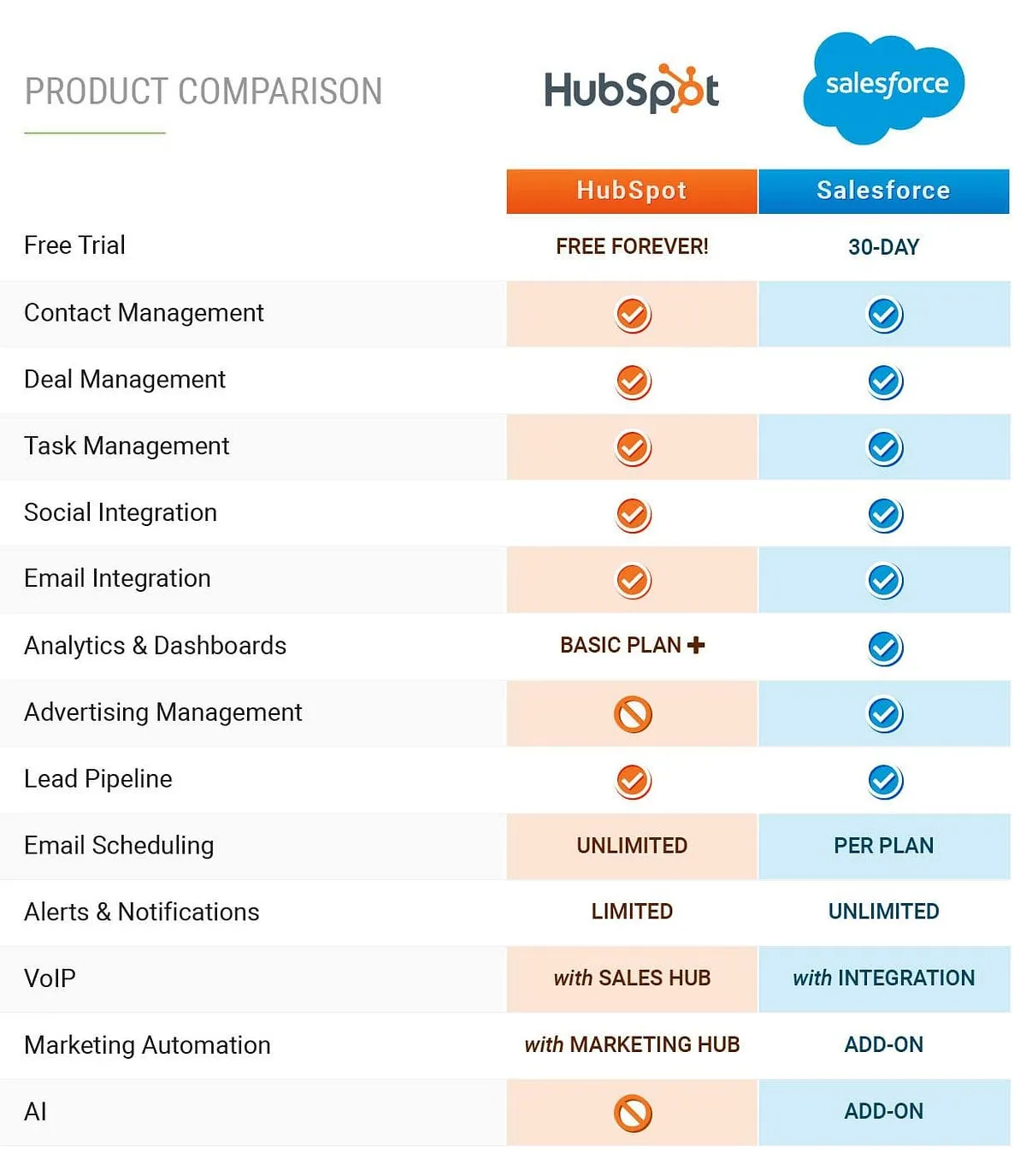
Selecting the right Customer Relationship Management (CRM) platform is one of the most critical tech stack decisions a growing enterprise will make. In today's competitive B2B market, two industry giants dominate the discussion: Salesforce Sales Cloud and HubSpot CRM. Both platforms offer robust automation, pipeline management, and analytics, but they cater to vastly different organizational structures and budgets.
In this comprehensive 2026 comparison, we evaluate Salesforce vs HubSpot for small business applications, breaking down licensing costs, hidden implementation expenses, ease of adoption, and scalability.
Core Architectural Differences
While both platforms aim to streamline your sales organization, their core development philosophies diverge significantly:
- HubSpot CRM: Built entirely in-house on a single unified codebase. It offers a seamless user interface where marketing, sales, and service hubs share data without complex third-party connectors.
- Salesforce Sales Cloud: An enterprise-grade engine built for maximum customization. Through its extensive AppExchange ecosystem and Developer Sandbox, Salesforce can be molded to fit virtually any bespoke sales workflow.
Ease of Use and Team Onboarding
For small to mid-sized businesses (SMBs) without a dedicated IT department, platform usability directly impacts sales team adoption rates.
HubSpot excels in intuitive design. Sales reps can master contacts management, deal pipelines, and email tracking within hours. On the other hand, Salesforce features a steeper learning curve that often requires certified administrators to build custom fields, validation rules, and automated flow triggers.
Key Takeaway for SMBs
If your priority is speed to deployment and low administrative overhead, HubSpot offers a significantly lower barrier to entry. If you require complex, multi-tiered approval workflows across global sales teams, Salesforce remains the industry standard.
Pricing Breakdown and Total Cost of Ownership (TCO)
At first glance, entry-level tiers for both platforms appear affordable, but total cost of ownership shifts rapidly as your team expands.
HubSpot Pricing Structure
HubSpot offers a functional free core CRM, with paid tiers structured per seat and hub level (Starter, Professional, Enterprise). However, marketing contacts thresholds can increase monthly fees as your database expands.
Salesforce Pricing Structure
Salesforce requires a per-user annual contract commitment. While standard tiers (Starter, Professional) are competitively priced, hidden costs typically emerge through required third-party AppExchange add-ons, storage upgrades, and specialized administrative support.
Final Verdict: Which CRM Should You Choose?
When evaluating Salesforce vs HubSpot for small business operations in 2026, the ideal choice depends on your growth roadmap:
- Choose HubSpot if: You want an all-in-one CRM that integrates sales and inbound marketing out of the box with minimal technical configuration.
- Choose Salesforce if: You operate complex enterprise pipelines, require deep custom API integrations, or plan to scale past 100+ sales representatives.
Sponsored — Affiliate
Amazon Business & Tech Offers

Estée Lauder Little Black Primer™ Tint. Amplify. Set.
$30.00

Starface Hydro-Star® Recovery Hydrocolloid Star-Shaped
$25.99

Amazon Fire TV Stick 4K Max with Alexa Voice Remote Pro
$84.98

Apple AirTag (2nd Generation) - 4 Pack: Tracker for
$89.99

Blink Video Doorbell + Outdoor 4 – Wireless Doorbell
$103.99

Dell XPS 13 OLED Review (2026): Is It the Ultimate Business Laptop for Executives?
$0.00
Prices and availability are accurate as of publication. We may earn a commission at no extra cost to you.
Share this article
Help others find it — share on your favorite network.
Comments & Reader Rating